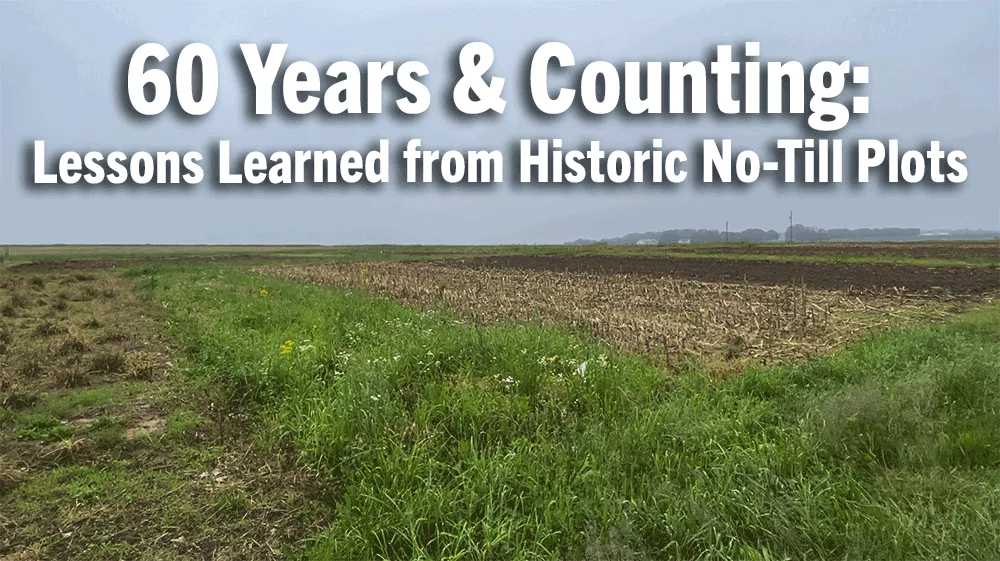
Since we’re in Ohio, let’s pay a visit to the town of Wooster, home of the world’s longest continuing no-till plots.
Glover Triplett and Dave Van Doren arrived at Ohio State University in the late 1950s, and not too long after that, the duo seeded this no-till research plot in 1962. And it’s still going strong today. Manbir Rakkar and Warren Dick from Ohio State check in with some key takeaways from the historic field.
Manbir Rakkar Ohio State Soil Fertility Extension Specialist: “Last year in the summer and fall, there was extreme drought. We took pictures. You could visibly see in the no-till vs. the tillage plots a huge visual difference in how the crops were doing. Same fertility, hybrids and everything. You could see how much difference it makes when you invest in these kinds of soil health practices.”
Warren Dick, Managed Historic No-Till Plots from 1980-2016, Wooster, Ohio: “You start reading about it more and more, but no-till is much more resilient to climate change. Everyone talks about climate change. I don’t think conservation ag is going to be the answer to preventing climate change from happening, but it is a good system to adapt to what’s happening. If it’s drier, wetter or hotter, the no-till plots adapt much better to that climate change. And I think that’s another story that needs to get out more. Instead of chasing carbon, carbon, carbon….I agree, carbon has many benefits and we need it in the field. It's absolutely important. But if we do all the right things, the carbon is going to come naturally.”
Ohio State No-Till Innovator Randall Reeder says the plots need to go on for another 60 years because there’s still so much to discover.
Watch the full version of this episode of Conservation Ag Update.