 Premium content is for our Digital-only and Premium subscribers. A Print-only subscription doesn't qualify. Please
No-Till Farmer
Get full access NOW to the most comprehensive, powerful and easy-to-use online resource for no-tillage practices. Just one good idea will pay for your subscription hundreds of times over.

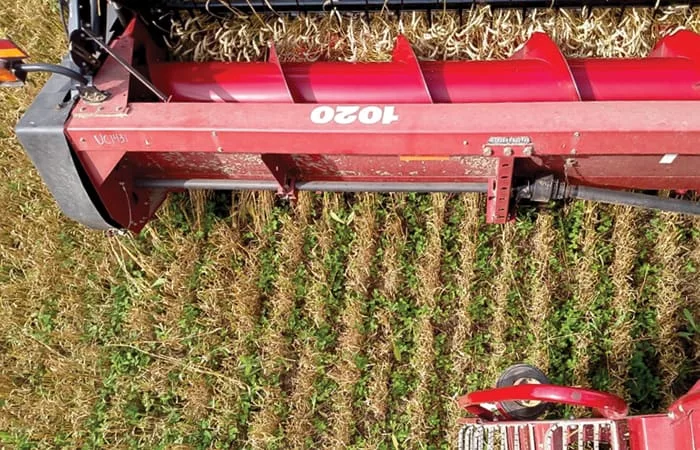
The greatest of growing seasons has little effect on Trent Sanderson’s approach to cover crops across his family’s 2,000-acre corn, soybean and wheat operation in Clare, Ill. In his mind, more can always be done to maximize the value of every field, whether it’s a new seed variety, application method or frugal machinery investments.
Erosion concerns contributed to Sanderson’s adoption of strip-till in 2007, along with the benefits of an improved seedbed and organic matter provided by untilled crop residue. After experiencing initial improvements to soil health, he doubled down with implementing cover crop practices in 2012.
Experimenting with a series of seed mixes including cereal rye, radishes and red clover, along with different seeding strategies to minimize seasonal risk, Sanderson has tracked the tendencies of his fields.
Ultimately, he says there’s no substitute to a trial-and-error approach for farmers in search of the best personal methods with cover cropping success.
“I get so many questions on what our results are from people that haven’t tried anything at all,” Sanderson says. “Get your hands dirty and dig up some roots to understand what’s going on.”
Keep Covers in Your Rotation Without Breaking the Bank
Now is the time to improve and evolve your no-till system. Experts say some farmers have been overdoing the seeding rates for…

Get full access NOW to the most comprehensive, powerful and easy-to-use online resource for no-tillage practices. Just one good idea will pay for your subscription hundreds of times over.
Download these helpful knowledge building tools

We have engineered and developed the most advanced concave system that threshes all crops, eliminates rotor loss, improves grain quality, gives you a cleaner sample – all with one set of XPR concaves.

At Titan International, our product portfolio reflects our commitment to innovation and high-quality products. Titan International offers a full line of solution-focused wheel, tire, and undercarriage products for a wide variety of off-the-road equipment in agriculture, construction, forestry, mining, power sports, high-speed trailers, and outdoor power equipment segments. As one of the largest North American manufacturers, with a network of dealers all over the world, Titan is an industry leader that original equipment manufacturers and operators can count on for durable products and quality service.

Provide expert analysis and decision support to increase productivity and profitability.