 Premium content is for our Digital-only and Premium subscribers. A Print-only subscription doesn't qualify. Please
No-Till Farmer
Get full access NOW to the most comprehensive, powerful and easy-to-use online resource for no-tillage practices. Just one good idea will pay for your subscription hundreds of times over.
The moment that convinced Max Martin to park his plow and switch to no-till came as he witnessed the fate of precious May rainfall on his farm after enduring years of drought.
“I stood in my rubber boots in one of our standing dirty ditches on the ranch, watching all that water leave the ranch and going to the next ranch. And at that point in time I said, ‘You know, this isn’t fun,’” Martin told attendees at the Southern Soil Health Conference in January.
“We had to change the way we think about water. We had to sell cattle during the drought because, quite frankly, we got tired of taking the tractor out and pulling dead cattle out of mud holes.”
Since then, Martin has built four lakes on his farm ranging from 3 to 22 acres to hold rainwater. And in addition to eliminating tillage he’s begun seeding various species of cover crops to provide more nutritious food sources for cattle, address compaction problems, fix nutrients, control weeds and erosion, improve pest suppression and feed soil biology.
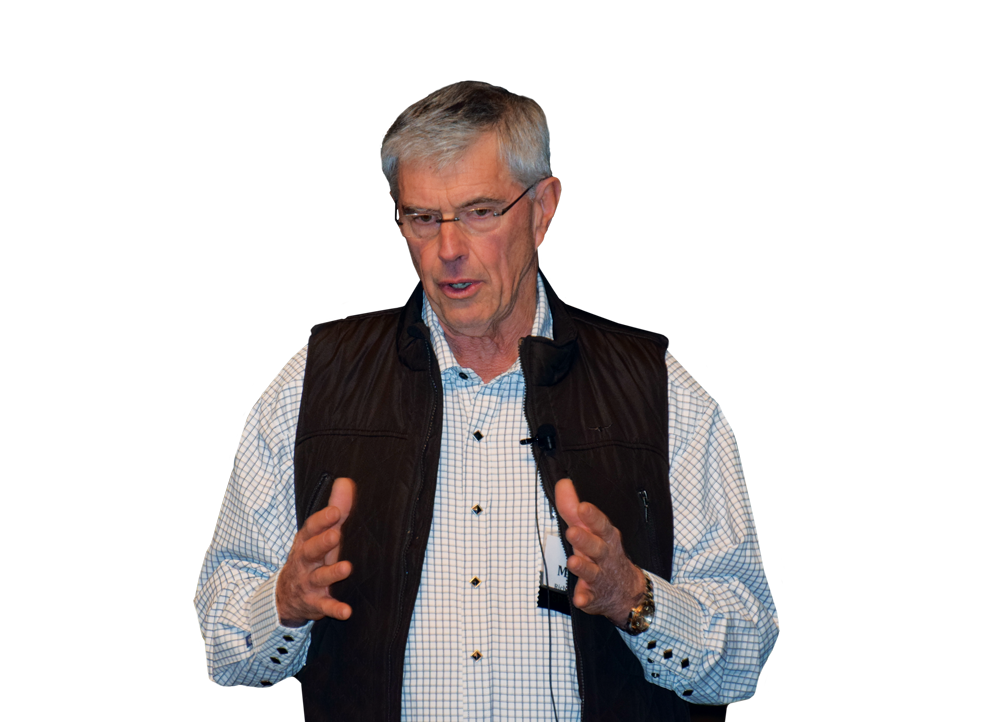
Max Martin
The CEO of a major computer programming company, Martin runs a 500-acre calf-stocker-feeder operation and raises 550 acres of wheat and cover crops, 100 acres of Bermuda and 12,000 acres of additional pasture near Loving in northern Texas.
While he’s mostly rotated wheat for the last 20 years, Martin has added radish and rape to the wheat, and he planned this fall to seed a rye/triticale…

Get full access NOW to the most comprehensive, powerful and easy-to-use online resource for no-tillage practices. Just one good idea will pay for your subscription hundreds of times over.
Download these helpful knowledge building tools

We have engineered and developed the most advanced concave system that threshes all crops, eliminates rotor loss, improves grain quality, gives you a cleaner sample – all with one set of XPR concaves.

At Titan International, our product portfolio reflects our commitment to innovation and high-quality products. Titan International offers a full line of solution-focused wheel, tire, and undercarriage products for a wide variety of off-the-road equipment in agriculture, construction, forestry, mining, power sports, high-speed trailers, and outdoor power equipment segments. As one of the largest North American manufacturers, with a network of dealers all over the world, Titan is an industry leader that original equipment manufacturers and operators can count on for durable products and quality service.

Provide expert analysis and decision support to increase productivity and profitability.