 Premium content is for our Digital-only and Premium subscribers. A Print-only subscription doesn't qualify. Please
No-Till Farmer
Get full access NOW to the most comprehensive, powerful and easy-to-use online resource for no-tillage practices. Just one good idea will pay for your subscription hundreds of times over.
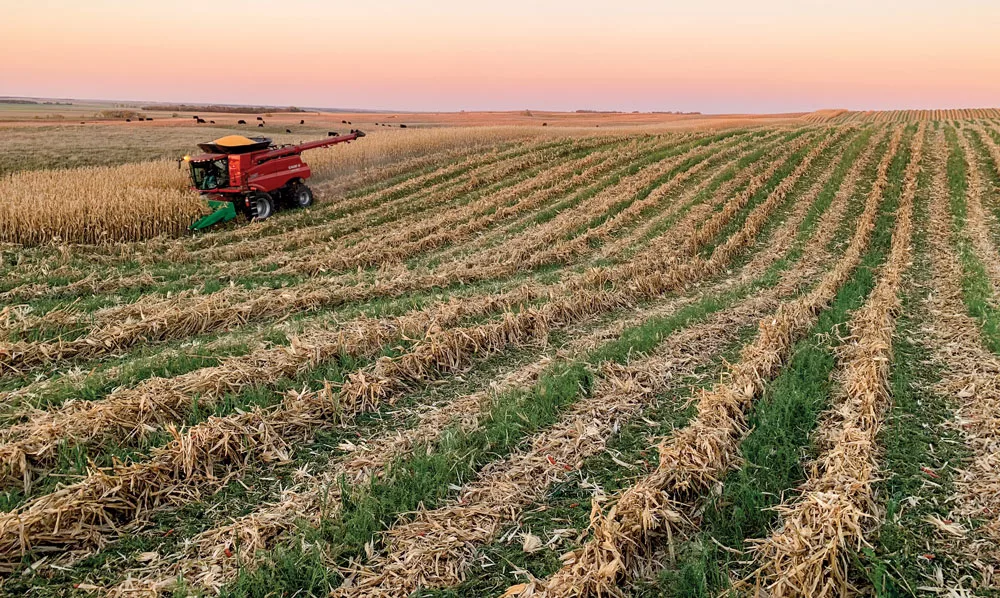
SOLAR CORRIDOR. Paired 60-inch corn rows create a solar corridor where interseeded cover crops can thrive without competing with the crop. The entire corn plant also stays greener longer, helping achieve ever increasing farm yeilds. Joe Breker
The "dirty thirties" left quite an impression on my dad, who was a teenager during the gritty era. It was a time when economics were terrible and erosion was even worse.
Witnessing such a trying time made him very open to implementing all the conservation practices he knew of and that were available to him. I grew up on the stories and under the influence of the resulting ethic of conservation in farming. It’s an ethic that continues to grow and adapt on our farm today.
My first introduction to no-till came through a 1970s soils class at North Dakota State University. The instructor didn’t know much about it —nobody did at the time — but he challenged the class to learn more. I took that challenge to heart. I found growers in northeastern North Dakota and southern Manitoba who were actively no-tilling and toured their farms. I found it interesting and figured it was something I could bring home to our farm.
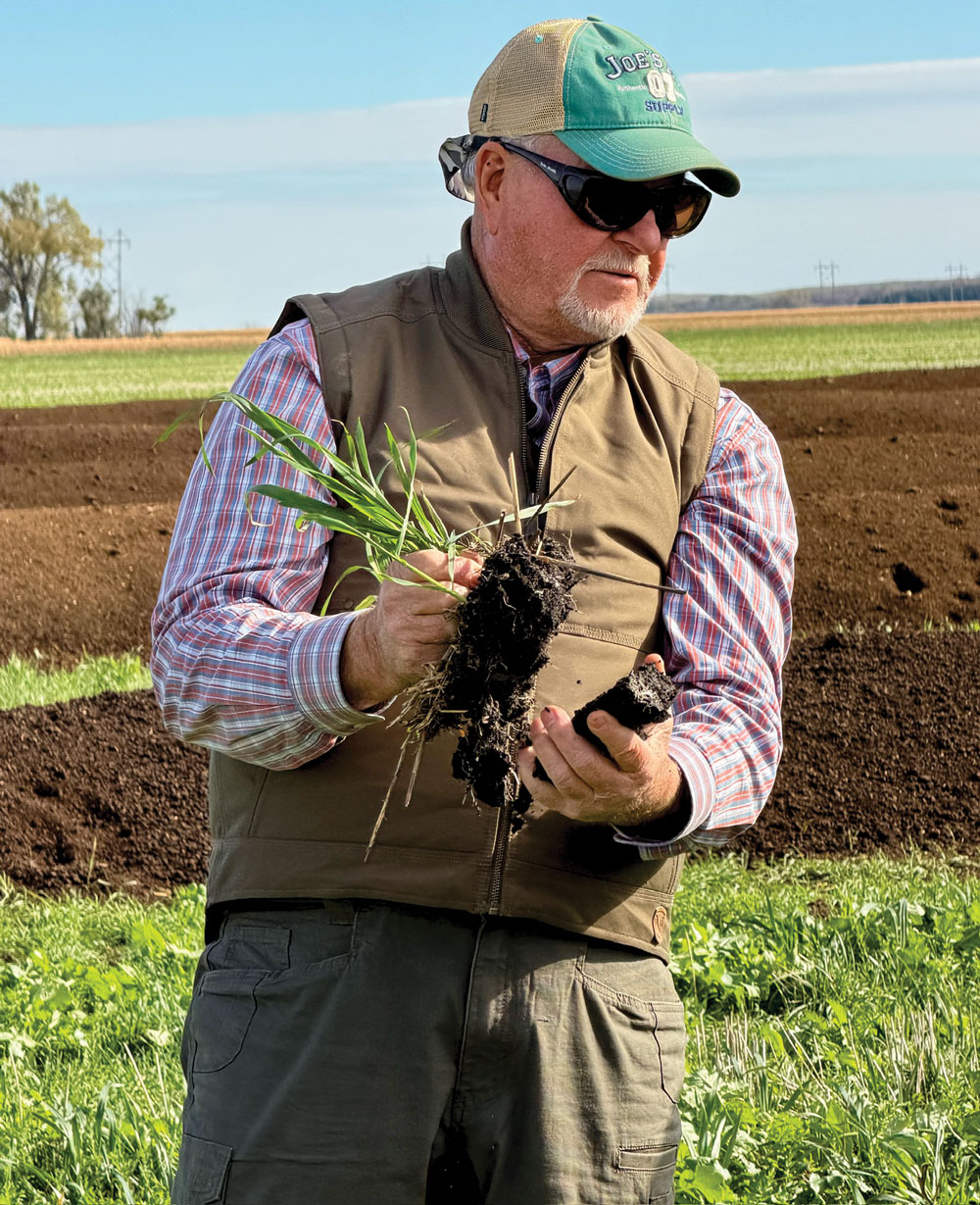
NAME: Joe Breker
LOCATION: Havana, N.D.
ACRES: 1,800
YEARS NO-TILLING: 46
CROPS: Corn, soybeans, cereal rye, specialty seed crops
PRIMARY SOIL TYPE: Clay
ANNUAL PRECIPITATION: 20-22 inches
True to form, my father embraced the idea. We started no-tilling in the 1980s and haven’t looked back. Instead, I continue to drive forward pushing to see how…

Get full access NOW to the most comprehensive, powerful and easy-to-use online resource for no-tillage practices. Just one good idea will pay for your subscription hundreds of times over.
Download these helpful knowledge building tools

We have engineered and developed the most advanced concave system that threshes all crops, eliminates rotor loss, improves grain quality, gives you a cleaner sample – all with one set of XPR concaves.

At Titan International, our product portfolio reflects our commitment to innovation and high-quality products. Titan International offers a full line of solution-focused wheel, tire, and undercarriage products for a wide variety of off-the-road equipment in agriculture, construction, forestry, mining, power sports, high-speed trailers, and outdoor power equipment segments. As one of the largest North American manufacturers, with a network of dealers all over the world, Titan is an industry leader that original equipment manufacturers and operators can count on for durable products and quality service.

Provide expert analysis and decision support to increase productivity and profitability.