 Premium content is for our Digital-only and Premium subscribers. A Print-only subscription doesn't qualify. Please
No-Till Farmer
Get full access NOW to the most comprehensive, powerful and easy-to-use online resource for no-tillage practices. Just one good idea will pay for your subscription hundreds of times over.

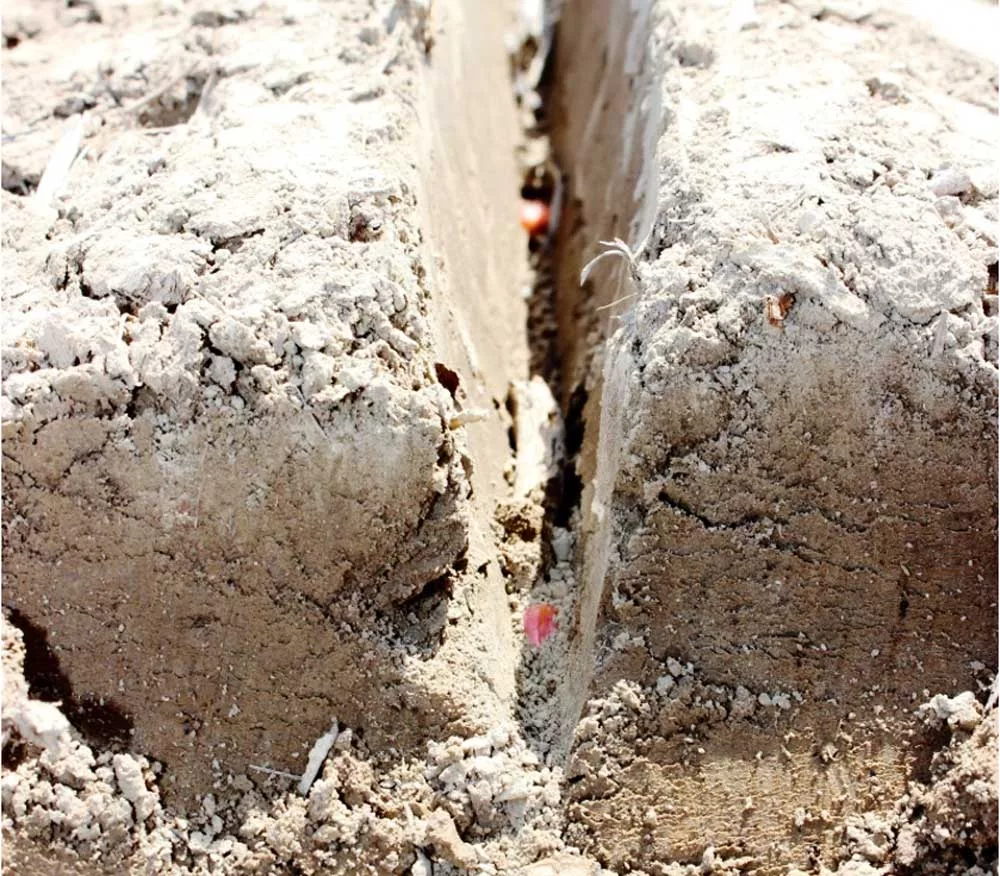
SET UP FOR SUCCESS. No-tillers should think about the microenvironment they’re setting up around the seed when planting, and how the planter performs within that environment, says Minster, Ohio, no-till planting consultant Bill Lehmkuhl. What happens after the first day or two of planting with stand establishment and emergence will often show what potential the crop may have.
When Bill Lehmkuhl started doing planter clinics in 1994, he says most growers spent more time managing their harvesting equipment than their planter. Growing up on the farm, Lehmkuhl’s late father commented he spent more time off the tractor while planting than in the tractor.
But Lehmkuhl knows this: by the time no-tillers are fussing over their combine, it’s too late to recover yield from poorly planted crops.
“The sins of planting will haunt you all season long. The planter pass is sacred,” says the Precision Agri-Services consultant from Minster, Ohio, who’s put on clinics and done consulting work in 21 states and across Canada. “You’ve got to dig in the ground. You’ve got to pay attention.”
No-tillers need to think of planting in terms of the microenvironment they are setting up around the seed and how the planter performs within that environment.
“You still need to get your butt out of that tractor seat. I don’t care what that monitor shows you. You need to get out and dig across the entire width of where the gauge wheels run to see what that planter is doing as far as down force and other types of things,” he says. “Take an air tank or leaf blower out to the field and blow out about 10 feet of row and you can really see what’s going on within the sidewalls and that microenvironment of that field. I suggest doing this right behind the planter pass to check for…

Get full access NOW to the most comprehensive, powerful and easy-to-use online resource for no-tillage practices. Just one good idea will pay for your subscription hundreds of times over.
Download these helpful knowledge building tools

We have engineered and developed the most advanced concave system that threshes all crops, eliminates rotor loss, improves grain quality, gives you a cleaner sample – all with one set of XPR concaves.

At Titan International, our product portfolio reflects our commitment to innovation and high-quality products. Titan International offers a full line of solution-focused wheel, tire, and undercarriage products for a wide variety of off-the-road equipment in agriculture, construction, forestry, mining, power sports, high-speed trailers, and outdoor power equipment segments. As one of the largest North American manufacturers, with a network of dealers all over the world, Titan is an industry leader that original equipment manufacturers and operators can count on for durable products and quality service.

Provide expert analysis and decision support to increase productivity and profitability.