Each month, the conservation ag group at Cornell University offers an analysis of the latest scientific papers dealing with conservation agriculture research from around the world. For this on-going web series, our editors will be selecting several research papers from the Cornell list that will be of special interest to North American no-tillers, strip-tillers and cover croppers.
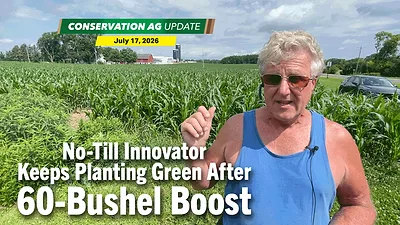
Obviously this goes against many of the concepts we emphasize in No-Till Farmer, but I was interested in understanding the “why” behind this no-till farmer’s decision to plow again on heavy soils.
The ForGround by Bayer team and Dr. Alejandro Plastina, Director of the Rural Farm Finance and Policy Analysis Center at the University of Missouri, share an informative presentation on the farm income outlook for 2025 and the potential revenue that can be earned through the rapidly growing carbon industry.
Phosphorus, potassium, sulfur and nitrogen. All are traditional nutrients growers plan to put into soil each year to help maximize their yield potential. But did you know there are 3 other major components that are often overlooked?
It is estimated that about 20-40% has experienced degradation in the last several decades, including 70% of freshwater use. To put things into further context, in 1960, arable land worldwide (per capita) was 0.42. It is thought this will be reduced to 0.19 in 2050.
All farmers have a unique set of circumstances that influence the specific production practices they implement on their farms, whether that be an organic, conventional or GMO production systems.
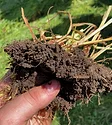
Wayne Volkl, co-owner of SWJ Consulting, says no-tillers need to focus on fungi, the most efficient piece of the biological puzzle, when building their soil biology.
Understanding how carbon moves through the soil and how long it stays there could have huge implications for estimating the true environmental value of carbon credits.
Get full access NOW to the most comprehensive, powerful and easy-to-use online resource for no-tillage practices. Just one good idea will pay for your subscription hundreds of times over.
On this episode of Conservation Ag Update, brought to you by Titan International, a big piece of equipment is unveiled at the Kinze Product Innovation Day in Williamsburg, Iowa.
We have engineered and developed the most advanced concave system that threshes all crops, eliminates rotor loss, improves grain quality, gives you a cleaner sample – all with one set of XPR concaves.
At Titan International, our product portfolio reflects our commitment to innovation and high-quality products. Titan International offers a full line of solution-focused wheel, tire, and undercarriage products for a wide variety of off-the-road equipment in agriculture, construction, forestry, mining, power sports, high-speed trailers, and outdoor power equipment segments. As one of the largest North American manufacturers, with a network of dealers all over the world, Titan is an industry leader that original equipment manufacturers and operators can count on for durable products and quality service.