 Premium content is for our Digital-only and Premium subscribers. A Print-only subscription doesn't qualify. Please
No-Till Farmer
Get full access NOW to the most comprehensive, powerful and easy-to-use online resource for no-tillage practices. Just one good idea will pay for your subscription hundreds of times over.
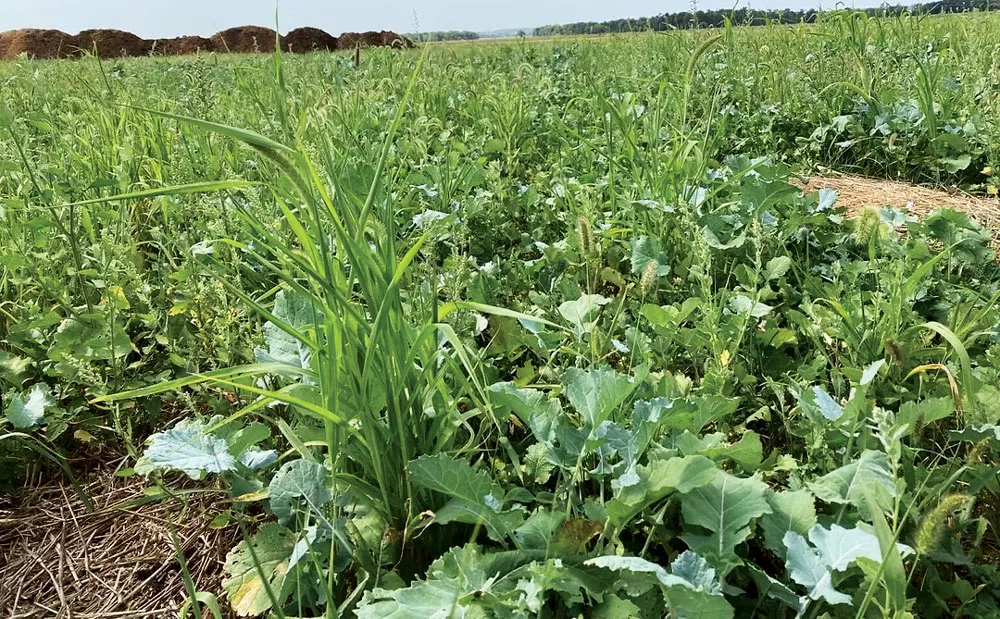
ONE STEP AT A TIME. A popular strategy is to do cocktail blends with dozens of species in the mix. But for farmers just starting out with cover crops, there’s value in starting with 5-6 species and assessing their performance before adding more, says T.J. Kartes of Saddle Butte Ag. Practical Farmers of Iowa
Tj Kartes and Andy Linder both have first-hand experience with the highs and lows of cover cropping.
Kartes is an industry professional from southern Minnesota who works with multiple farmers across multiple states. He is also salesperson for the forage and cover crop seed company Saddle Butte Ag. Andy Linder runs a cropping and cattle operation near Faribault County, Minn., where he also sells seed for Saddle Butte and does custom application.
They’ve both learned never to waste an experience — good or bad — by keeping it to themselves. Below, find their guide on dos and don’ts of cover cropping.
Kartes says the biggest obstacle to adopting cover crops on the farm is fear of change.
Farmers also — rightly — fear the potential economic or financial impacts of adopting a new practice, he says. And they fear their landlords won’t appreciate them “raising weeds” on their land. But Kartes says he thinks of land as an asset that can either be depleted or appreciated.
“If you lose an inch of topsoil a year, it’s about $30,000 to $40,000 you’re pissing down the river. Do you want to do that every year? That’s not economics. But that’s a fear. It’s fear of change.”
Linder says many people believe that if they want to start cover cropping, they need special equipment. But farmers are incredibly creative, he says, and can make almost any equipment work with…
Get full access NOW to the most comprehensive, powerful and easy-to-use online resource for no-tillage practices. Just one good idea will pay for your subscription hundreds of times over.
Download these helpful knowledge building tools

We have engineered and developed the most advanced concave system that threshes all crops, eliminates rotor loss, improves grain quality, gives you a cleaner sample – all with one set of XPR concaves.

At Titan International, our product portfolio reflects our commitment to innovation and high-quality products. Titan International offers a full line of solution-focused wheel, tire, and undercarriage products for a wide variety of off-the-road equipment in agriculture, construction, forestry, mining, power sports, high-speed trailers, and outdoor power equipment segments. As one of the largest North American manufacturers, with a network of dealers all over the world, Titan is an industry leader that original equipment manufacturers and operators can count on for durable products and quality service.

Provide expert analysis and decision support to increase productivity and profitability.