 Premium content is for our Digital-only and Premium subscribers. A Print-only subscription doesn't qualify. Please
No-Till Farmer
Get full access NOW to the most comprehensive, powerful and easy-to-use online resource for no-tillage practices. Just one good idea will pay for your subscription hundreds of times over.
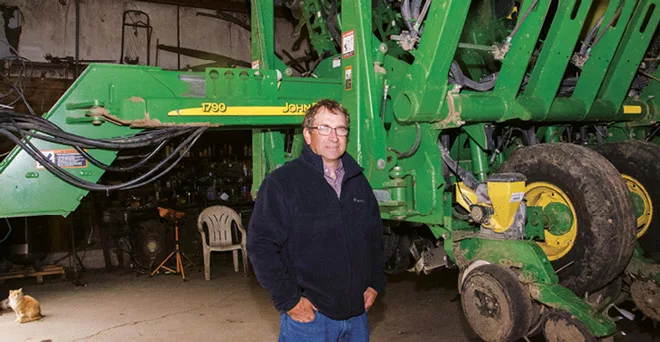
Having no-tilled for over 25 years, Illinois grower Randy DeSutter knows the benefits of nutrient replenishment, decreased soil erosion and lower machinery costs associated with his farming practices. He simply uses his local Henry County corn and soybean yield averages to gauge his success.
“I always compare my yields to the county averages. Last year we were about 10 bushels better on soybeans and 25-30 bushels better on corn than the county average. That’s what I use my yardstick against,” says DeSutter, of Woodhull.
The 2016 averages in Henry County were 208 bushels per acre for corn and 61 bushels for soybeans.
Prompted by the 1985 Farm Bill that required farmers with highly erodible land to have a conservation plan, DeSutter saw no yield drop after adopting no-till in those initially targeted erodible lands, so it convinced him to go 100% no-till soon after.
Between all of the family members, including his brothers Jim and Mike, son Matthew and nephew Drew, the DeSutters manage 5,600 acres of 50/50 soybeans and corn.
Last fall the Illinois Corn Growers Association was offering financial incentives to seed cover crops, a program with a stated goal of helping farmers reduce nitrate (N) losses by 15%…

Get full access NOW to the most comprehensive, powerful and easy-to-use online resource for no-tillage practices. Just one good idea will pay for your subscription hundreds of times over.
Download these helpful knowledge building tools

We have engineered and developed the most advanced concave system that threshes all crops, eliminates rotor loss, improves grain quality, gives you a cleaner sample – all with one set of XPR concaves.

At Titan International, our product portfolio reflects our commitment to innovation and high-quality products. Titan International offers a full line of solution-focused wheel, tire, and undercarriage products for a wide variety of off-the-road equipment in agriculture, construction, forestry, mining, power sports, high-speed trailers, and outdoor power equipment segments. As one of the largest North American manufacturers, with a network of dealers all over the world, Titan is an industry leader that original equipment manufacturers and operators can count on for durable products and quality service.

Provide expert analysis and decision support to increase productivity and profitability.